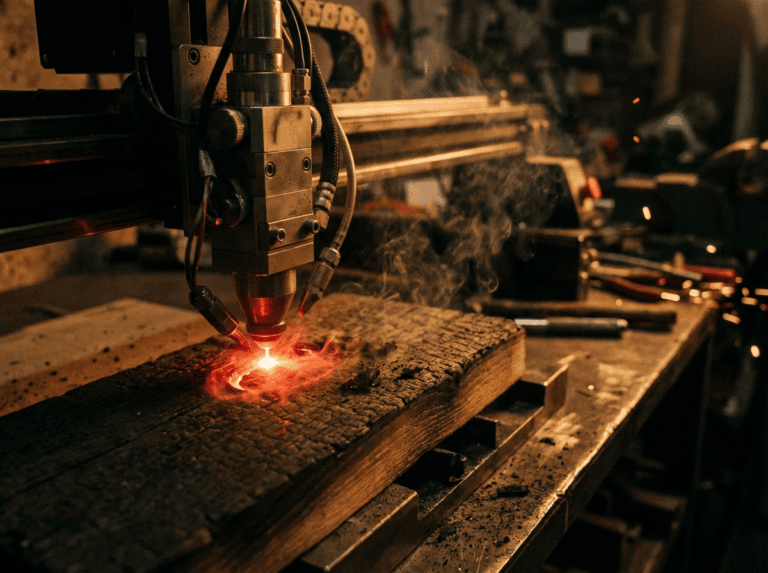
Why Saskatchewan Laser Cut Designs Are Different
Our laser cut designs reflect authentic prairie life because we live it. Highway signs we’ve actually driven past. Lakes where we’ve spent summers. Grain elevators we see every day. This isn’t research—it’s home. That authenticity shows in the work. When someone from Saskatchewan (or someone who misses Saskatchewan) sees our designs, they recognize them. Because they’re real.
How We Create Custom Laser Cut Designs in Saskatchewan: The Real Process
People ask where our laser cut designs Saskatchewan workshops produce come from. The short answer? Sometimes it’s a Saskatchewan highway sign that sparks an idea. Sometimes it’s a custom request. And sometimes it’s 2 AM and we’re sketching something that becomes our next bestseller.
Here’s the real process behind creating laser cut designs Saskatchewan—from initial sketch to finished product in our St. Gregor workshop.
Our Five-Step Design Process for Laser Cut Designs
Step 1: The Idea (The Deceptively Easy Part)
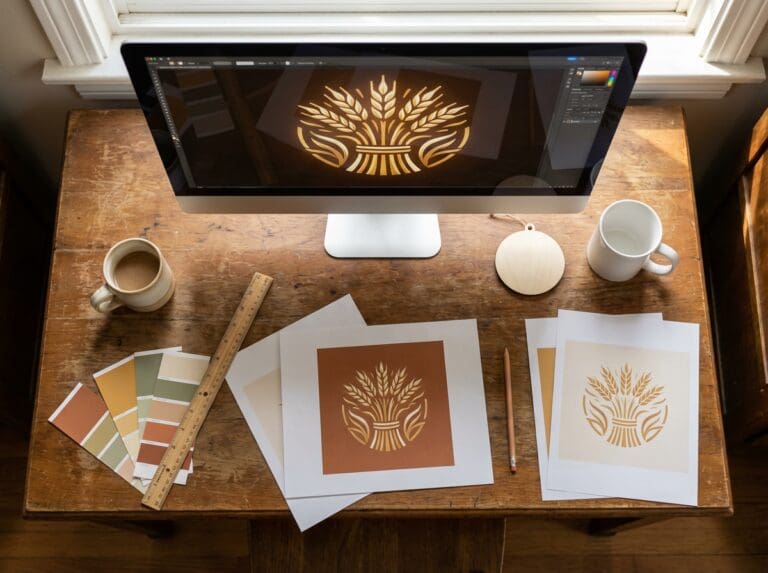
Ideas are cheap. We have hundreds of them scribbled in notebooks, saved in phone notes, and sketched on napkins. A wheat sheaf pattern for a mug. Custom lake coordinates for a sign. A prairie sunset coaster set.
Most sound brilliant at midnight. By morning coffee? Not so much.
The hard part isn’t coming up with laser cut design ideas—it’s figuring out which ones are actually worth making. Which ones will people connect with? Which ones reflect authentic Saskatchewan life instead of generic prairie aesthetic?
That filtering process is where the real work starts.
Step 2: The Sketch (Where Reality Sets In)
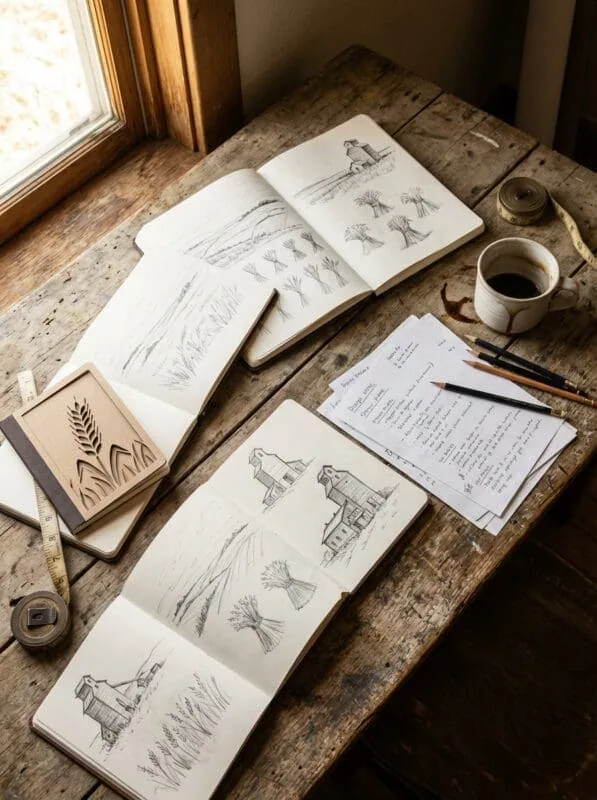
We always start on paper. Even though we have fancy design software, there’s something about putting pen to paper that forces you to think through whether an idea actually works.
Questions we ask at the sketch stage:
– Is it too detailed for our laser engraving equipment?
– Will it look good at 3 inches? At 12 inches?
– Does it feel distinctly prairie, or could it come from anywhere?
– Can we laser engrave this on wood without losing the detail?
– Will it translate well to sublimation on ceramic?
If it can’t pass a rough sketch test, it’s definitely not going to work as a finished product. If it survives scrutiny on paper, we move to the computer. That filtering process is where the real work starts.
Step 3: Digital Design (The Technical Part)
This is where we build the actual file that tells our laser cutter what to cut. We use vector software to create clean, precise lines that our equipment can read.
Every curve matters. Every measurement matters. A line that’s too thin won’t cut properly through wood. A laser cut design that’s too intricate will look muddy when sublimated onto a mug.
We’re also thinking about production at this stage:
– Can we cut this efficiently without wasting material?
– Will it warp during sublimation?
– How will it sit on different products—mugs, signs, coasters?
– Does the file work for both laser engraving on wood and sublimation printing on ceramic?
This step can take an hour or it can take days, depending on complexity. We don’t rush it.
Step 4: The Prototype (Where Dreams Meet Reality)
We never skip prototypes. Ever.
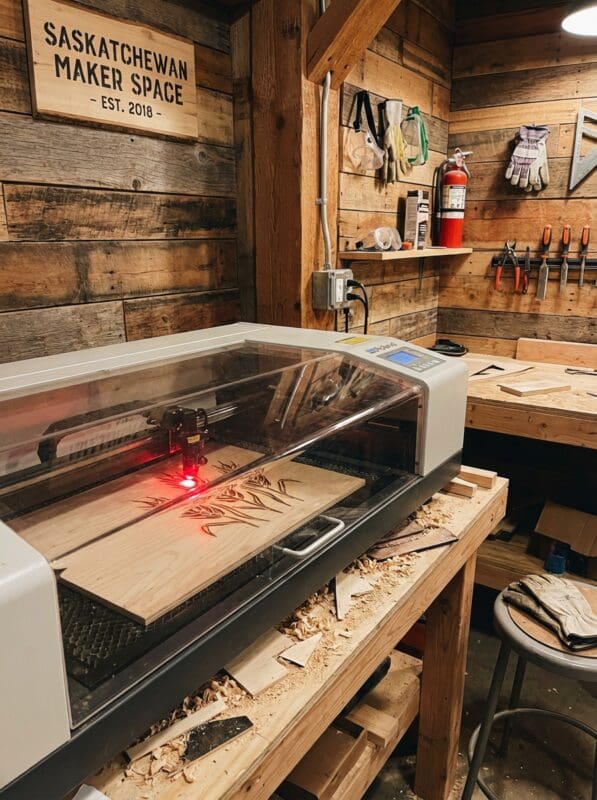
We cut a test piece with our laser cutter, sublimate it onto a Ceramic Mug or engrave it on wood, and live with it for a few days. Does it look as good in person as it did on screen? Does the scale work? Does it feel right?
Some custom laser cut designs nail it on the first try. Others need two or three rounds of adjustments—tweaking line weights, adjusting spacing, rethinking the whole composition.
And some? They go straight into the “nice try, better luck next time” folder.
Real example: We designed an elaborate prairie landscape with grain elevators, fields, and a dramatic sky. Looked incredible on screen. In real life? Too busy, too cluttered, lost all impact at mug size. Filed.
Step 5: Production (If It Makes the Cut)
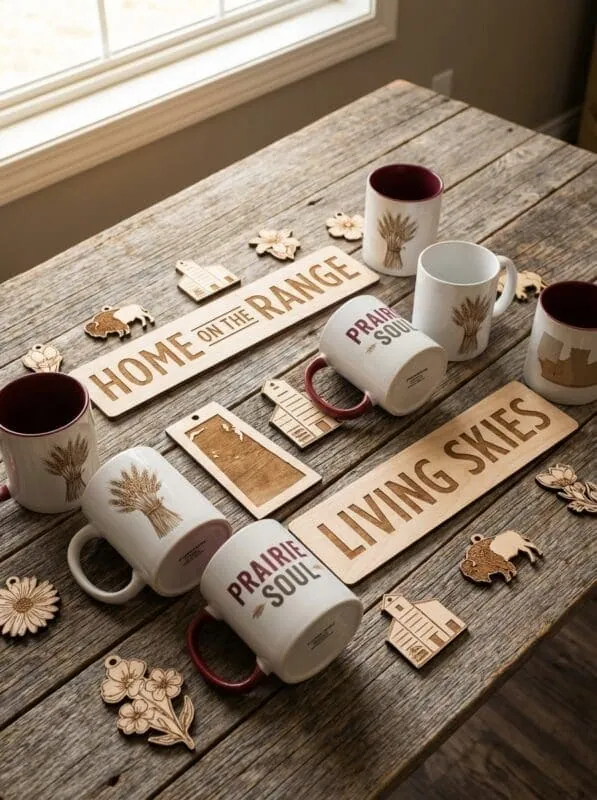
If a design survives all of that—sketch, digital refinement, prototype testing—it goes into production. We cut the pieces in batches, sublimate them onto products, and add them to our handmade shop.
But even then, we’re watching. Does it sell? Do people connect with it? Does it hold up over time in actual use?
If the answer is no, we pull it. We’re not interested in making things people don’t actually want just to have more products in the shop.
Our Design Success Rate (The Honest Numbers)
For every 10 laser cut designs we sketch, about 3 make it to the prototype stage.
Of those 3 prototypes, maybe 1 becomes a regular product in our shop. That’s a 10% success rate—and we’re okay with that.
We’d rather make one design we’re genuinely proud of than ten mediocre ones that just fill space. Quality over quantity isn’t just a slogan here. It’s how we actually operate.
The Designs That Surprise Us
Some of our bestselling laser cut designs weren’t the ones we expected.
That simple Saskatchewan highway sign mug? We thought it was too plain. Too obvious. Turns out, people love it. It’s one of our most requested custom designs.
That elaborate prairie sunset scene we labored over for weeks? It sits in the shop collecting dust. Hardly anyone looks at it twice.
You never really know until you make it, put it out there, and see what resonates with people.
Why We Design, Curate, and Follow Trends
Here’s the honest truth about our laser cut designs Saskatchewan: some we create from scratch, some we purchase from other designers, and yes—we absolutely make trendy stuff when it makes sense.
Original designs: When we have an idea that feels distinctly prairie or uniquely Saskatchewan, we sketch it, prototype it, and make it ourselves. Highway signs, lake coordinates, grain elevators—these come from us.
Purchased designs: We work with other designers whose aesthetic fits what we’re going for. We test everything before we commit, adapt it for our production process, and make sure it actually works on our equipment and materials.
Market trends: If there’s a design trend that people are asking for and we can execute it well, we’ll make it. We’re running a business, not an art gallery. If seasonal designs, popular patterns, or trending styles sell and fit our production capabilities—we’re doing them.
The standards that don’t change: Whether we designed it, bought it, or jumped on a trend, it still gets cut on our equipment, made in our St. Gregor workshop, inspected by us, and backed by our guarantee. The manufacturing quality doesn’t change based on where the design originated.
What We Won’t Make (Even If It’s Trending)
We’ll follow market trends, but we’re not making everything:
Designs that don’t work technically: Some things look great as digital art but fail completely in laser cutting or sublimation. Physics wins every time.
Things that compromise quality: If we can’t make it well with our equipment and materials, we’re not doing it. Period.
Designs that require materials we can’t source: We’re limited by what we can actually get from Canadian suppliers at reasonable prices.
Stuff that’s completely off-brand: We’re still Saskatchewan-focused. We’re not suddenly making tropical palm tree designs or American flag merchandise just because they’re trending elsewhere.
We’ll adapt to what the market wants, but within the constraints of what we can actually make well in our workshop.
Want to See the Process in Person?
If you’re curious about how we create custom laser cut designs, come to one of our Saskatchewan workshops. We don’t keep secrets. We’ll show you the entire process—from sketch to finished piece.
You’ll see the equipment. You’ll learn the software basics. You’ll understand why some designs work and others don’t. And you’ll leave with something you made yourself.
No corporate polish. No Instagram filters. Just the real, messy, rewarding work of making something with your hands in St. Gregor.
Common Questions About Our Laser Cut Design Process
Do you take custom laser cutting requests?
Sometimes. If it fits what we do and we think we can execute it well, yes. If it’s outside our wheelhouse or doesn’t match our brand, we’ll be honest and point you in the right direction.
Submit a custom order requestand we’ll let you know if we’re the right fit for your project.
How long does it take to design a new laser cut piece?
Anywhere from a few hours to a few weeks. Simple custom laser cut designs with clean lines can happen quickly. Complex designs with multiple prototypes and refinements take longer. We don’t rush it. If something’s worth making, it’s worth making right.
Can I suggest a laser cut design idea?
Absolutely. We’ve created some of our best pieces based on customer suggestions. Reach out at he***@******rn.ca and let us know what you’re thinking. We can’t promise we’ll make everything suggested, but we genuinely appreciate the ideas and always consider them.
Where can I buy your laser cut designs in Saskatchewan?
Right here in our shop. We proudly ship across Canada with Canada Post. Everything is made to order in St. Gregor, Saskatchewan—no warehouse inventory, no mass production, just custom work made when you order it.
What materials do you use for laser cutting?
We work primarily with wood for laser engraving (signs, ornaments, decorative pieces) and ceramic blanks for sublimation printing (mugs, drinkware). We source materials from Canadian suppliers whenever possible.
Do you offer laser cutting services for other people’s designs?
Occasionally, but it depends on the project. We’re primarily focused on our own laser cut designs and custom work that fits our brand. If you have a project in mind, reach out and we’ll let you know if we can help.