How Sublimation Printing Works — Behind the Curtain
Ever wonder how we get those vibrant, permanent designs onto mugs and tumblers? Here’s the full behind-the-scenes look at how sublimation printing works in our St. Gregor workshop.
People see the vibrant designs on our mugs and tumblers and assume they’re painted on, or maybe it’s some kind of fancy sticker. When I tell them the design is actually inside the coating — not on top of it — they usually look at me like I’m making it up. Understanding how sublimation printing works changes the way you look at custom drinkware.
Sublimation printing uses basic chemistry to create prints that are permanent, vibrant, and won’t peel, crack, or fade with normal use. Here’s how sublimation printing works at Grey Barn Handwerk, explained without the science textbook.
The Science of How Sublimation Printing Works — In Plain English
Sublimation is a process where a solid turns directly into a gas without becoming liquid first. Think of dry ice — it goes from solid straight to fog without melting into water. Sublimation ink does the same thing.
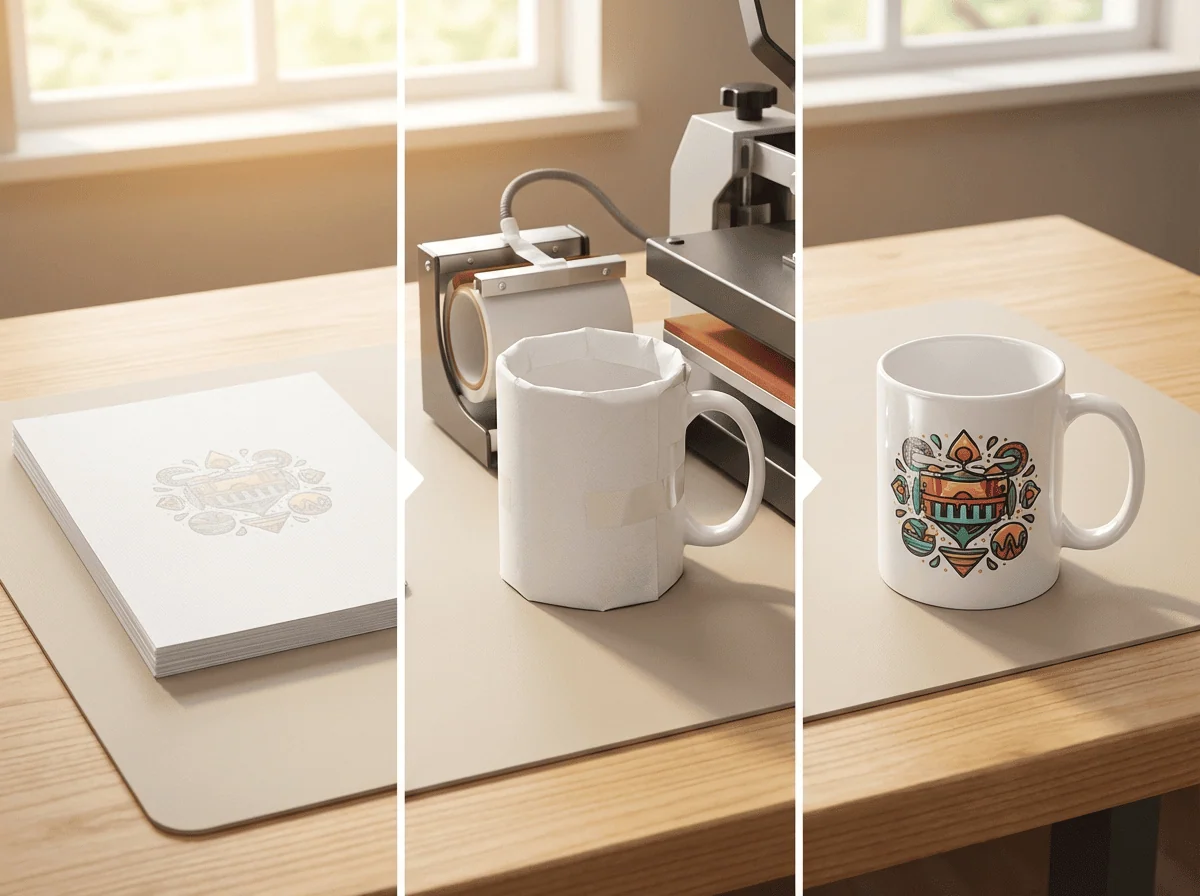
Here’s the process: we print a design onto special transfer paper using sublimation ink. We wrap that paper around a mug, tumbler, or other product. Then we apply heat and pressure using a heat press. The heat turns the solid ink into a gas, and that gas penetrates the polymer coating on the product’s surface. When it cools, the gas turns back into a solid — but now it’s embedded inside the coating.
The design isn’t sitting on top of the product. It’s literally inside the surface layer. That’s why sublimation prints don’t peel, chip, or scratch off. The design and the product are now one thing.
What Can Be Sublimation Printed?
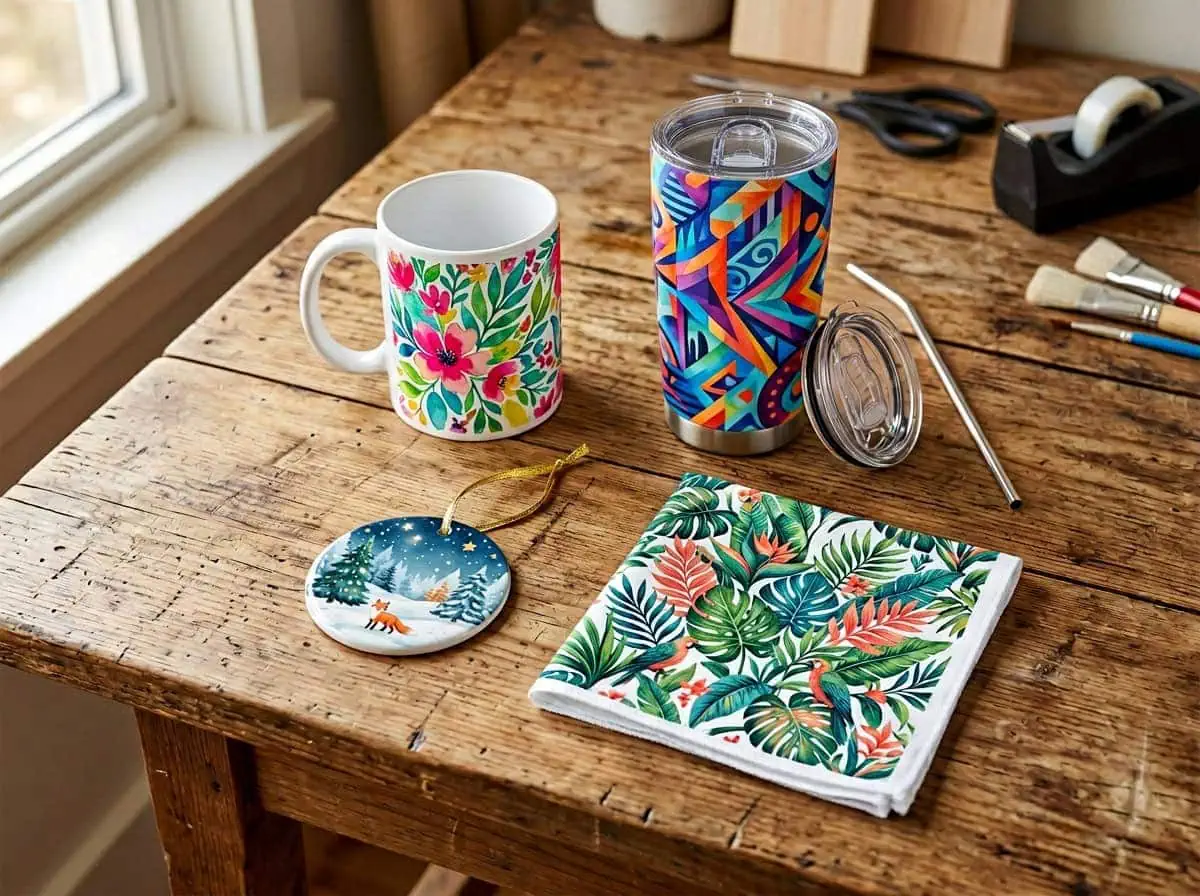
Sublimation works on materials with a polymer coating — which is why it’s perfect for coated ceramic mugs, stainless steel tumblers with polyester coatings, and polyester fabrics. The polymer is what the ink bonds to.
At Grey Barn Handwerk, we sublimate onto ceramic mugs (our bread and butter), stainless steel tumblers and water bottles, polyester blend fabrics, and specialty items like ornaments and coasters with polymer coatings.
You can’t sublimate onto raw wood, uncoated metal, or 100% cotton. The surface needs that polymer layer for the ink to bond with. That’s why our cutting boards and some apparel use laser engraving or Forever Laser Dark transfers instead.
The Grey Barn Sublimation Process — Step by Step
Every sublimation piece starts with a digital design. We create or prepare the artwork in design software, mirror it (because it transfers in reverse), and print it onto sublimation transfer paper using special sublimation ink.
The printed transfer gets carefully aligned on the product — this is where precision matters. A millimetre off and the design wraps crooked. We secure it with heat-resistant tape so nothing shifts during pressing.
Then it goes into the heat press. Temperature, pressure, and time are the three variables. Too hot and the colours blow out. Not enough pressure and the transfer is spotty. Wrong timing and you get either a faded print or a scorched product. Every product type has its own sweet spot.
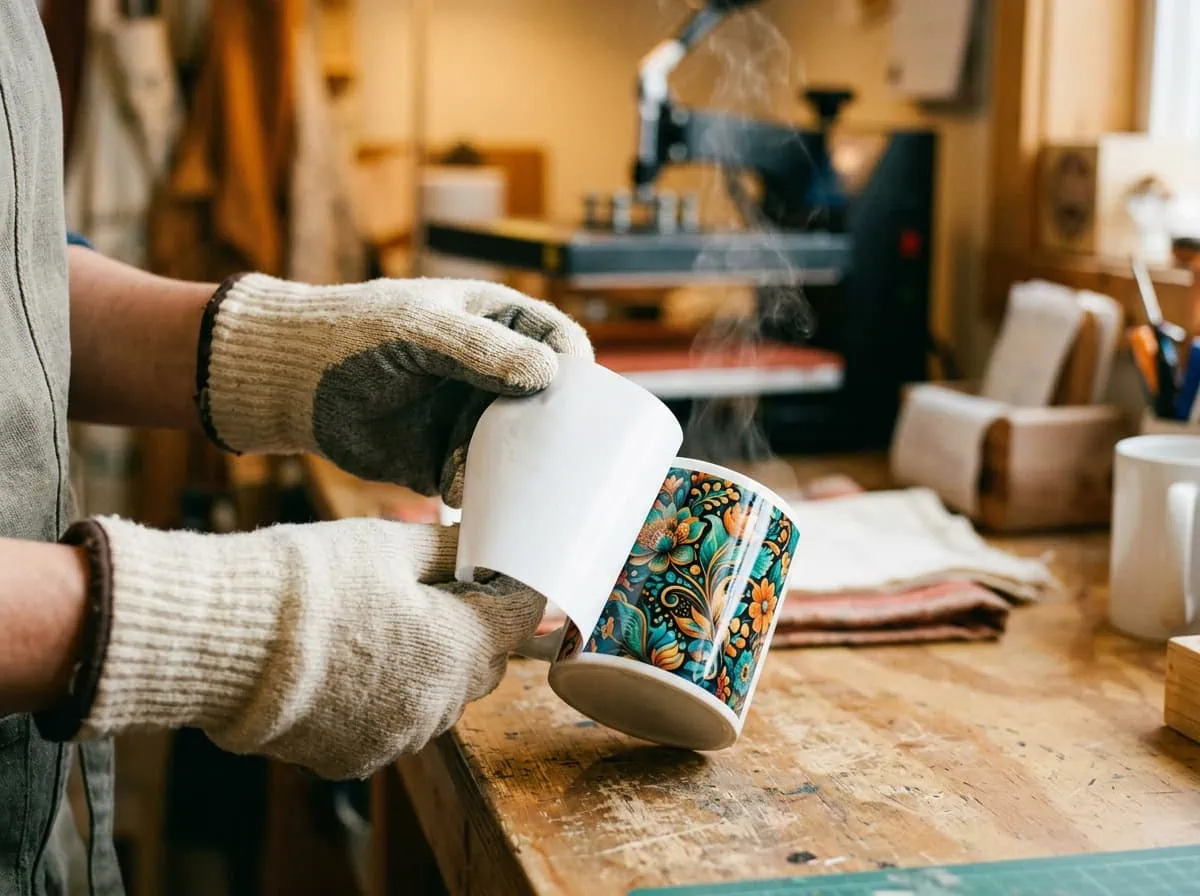
For our 15oz ceramic mugs, that sweet spot is around 400°F for about 4-5 minutes under firm, even pressure. When the timer goes off, we remove the mug, peel off the transfer paper, and what’s underneath is a vibrant, permanent, full-colour design.
Why Sublimation Colours Are So Vibrant
If you’ve ever compared a sublimation print to a screen print or a regular inkjet print, you’ve noticed the colours are significantly more vivid. That’s because the ink is literally inside the surface, not sitting on top of it. Light passes through the transparent polymer coating and bounces off the ink below, creating colours that look almost backlit.
Sublimation also allows full photographic colour reproduction. We can print photographs, gradients, intricate patterns, and designs with hundreds of colours — all in a single press. Screen printing can’t do that without multiple passes and setup costs.
The Mistakes Nobody Sees
For every perfect mug that ships, there’s a learning curve behind it. Sublimation looks simple once you know the settings, but getting there involves a lot of test prints, wasted blanks, and colourful language.
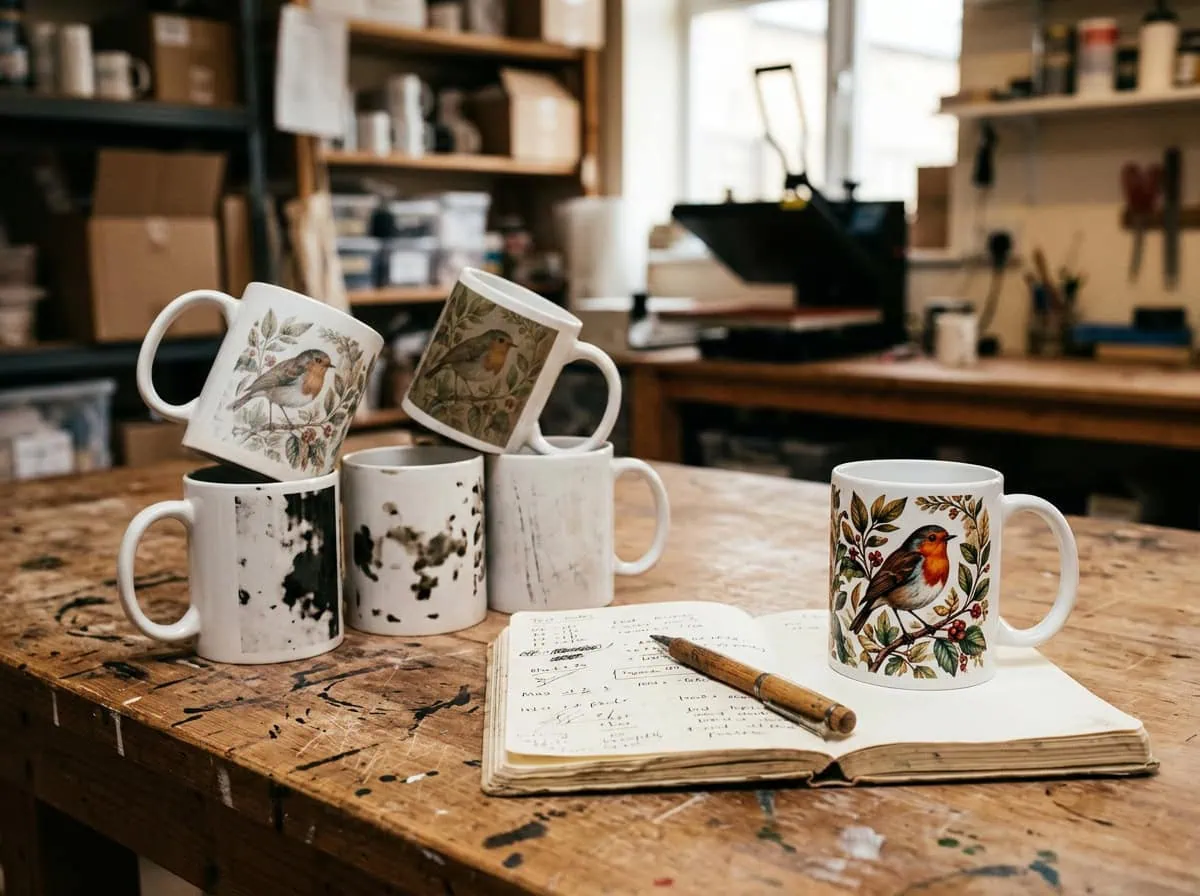
Temperature is off by 10 degrees? The colours shift. Pressure is uneven? One side is vivid and the other is faded. Transfer paper shifts during pressing? You get a ghost image. Humidity is too high? The ink doesn’t transfer cleanly.
We’ve dialled in our process through hundreds of test runs and we keep detailed notes on every product type, every ink batch, and every environmental variable. It’s the kind of precision that looks effortless from the outside but requires constant attention behind the scenes.
Why We Love Sublimation
Now you know how sublimation printing works — and why we’re so passionate about it. Sublimation lets us create products with full-colour, photographic-quality, permanent designs that you can use daily and wash repeatedly without degradation. It’s the technology that makes our custom mugs, tumblers, and drinkware possible at the quality level we demand.
Combined with our laser engraving capabilities, sublimation gives us the ability to offer a range of Saskatchewan handcrafted products that cover every gift-giving need — from personalized mugs to engraved cutting boards.
Want to see the results? Browse our drinkware collection or Custom Ordersstart a custom order with your own design.