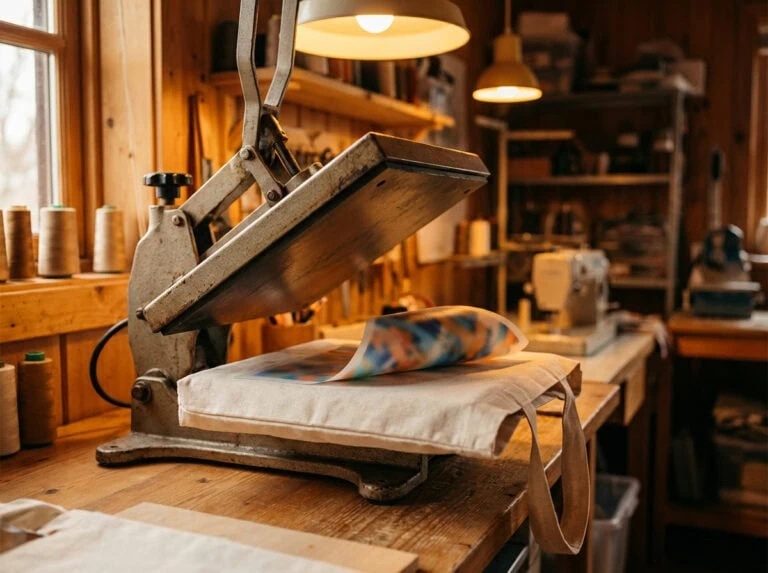
How Laser Engraving Works — A Look Inside Our Workshop
“How does the laser thing work?” is probably the question we get asked most. Here’s the full answer — from design file to finished product — explained by someone who runs the machine daily.
“How does the laser thing work?” is probably the question I get asked most — right after “can you engrave my dog’s face on a mug?” (The answer to that one is: probably, send me the photo.)
If you’ve ever wondered how laser engraving works, you’re in the right place. It’s the backbone of what we do at Grey Barn Handwerk. It’s how we turn flat pieces of wood into ornaments, plain cutting boards into family heirlooms, and stainless steel tumblers into personalized keepsakes. Here’s the full breakdown, explained by someone who runs the machine daily and occasionally talks to it when things go sideways.
The Basic Principle — How Laser Engraving Works at Its Core
A laser engraver uses a focused beam of light (CO2 laser, in our case) to burn, vaporize, or mark the surface of a material. The laser follows a digital design file — essentially tracing the artwork onto the material at incredibly precise depths and detail levels.
Think of it like a very expensive, very focused magnifying glass that draws pictures instead of starting fires in the backyard. Same basic concept. Much better results.
What Materials Can Be Laser Engraved?
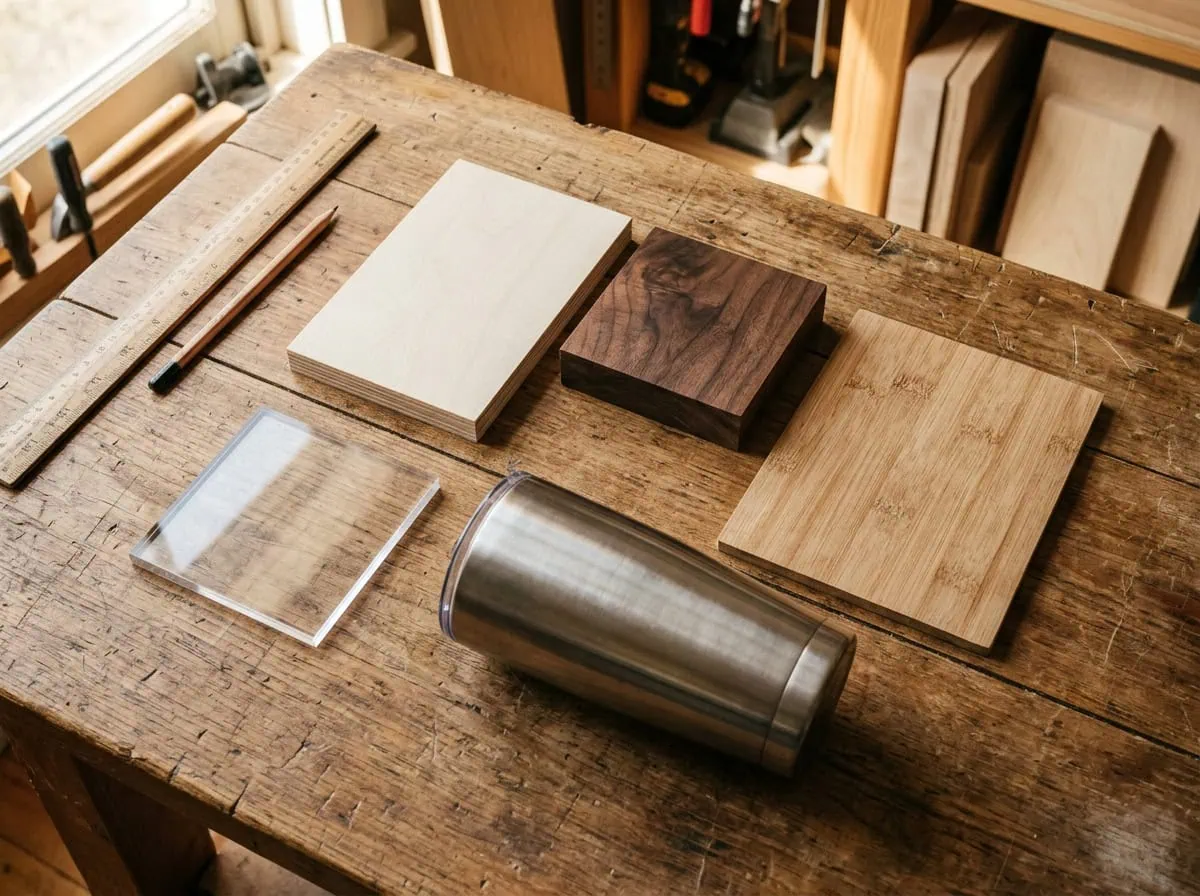
At Grey Barn Handwerk, we laser engrave on wood (birch, walnut, maple, bamboo), stainless steel drinkware, coated ceramics, leather, acrylic, and a handful of other materials we’ve tested and approved. Each material reacts differently to the laser — wood burns and darkens, coated metals reveal the base material underneath, and acrylic cuts clean edges.
Not everything can be laser engraved. We don’t work with PVC (it releases toxic chlorine gas — hard no), certain plastics, and materials with unpredictable coatings. Safety first, cool projects second.
From Design File to Finished Product
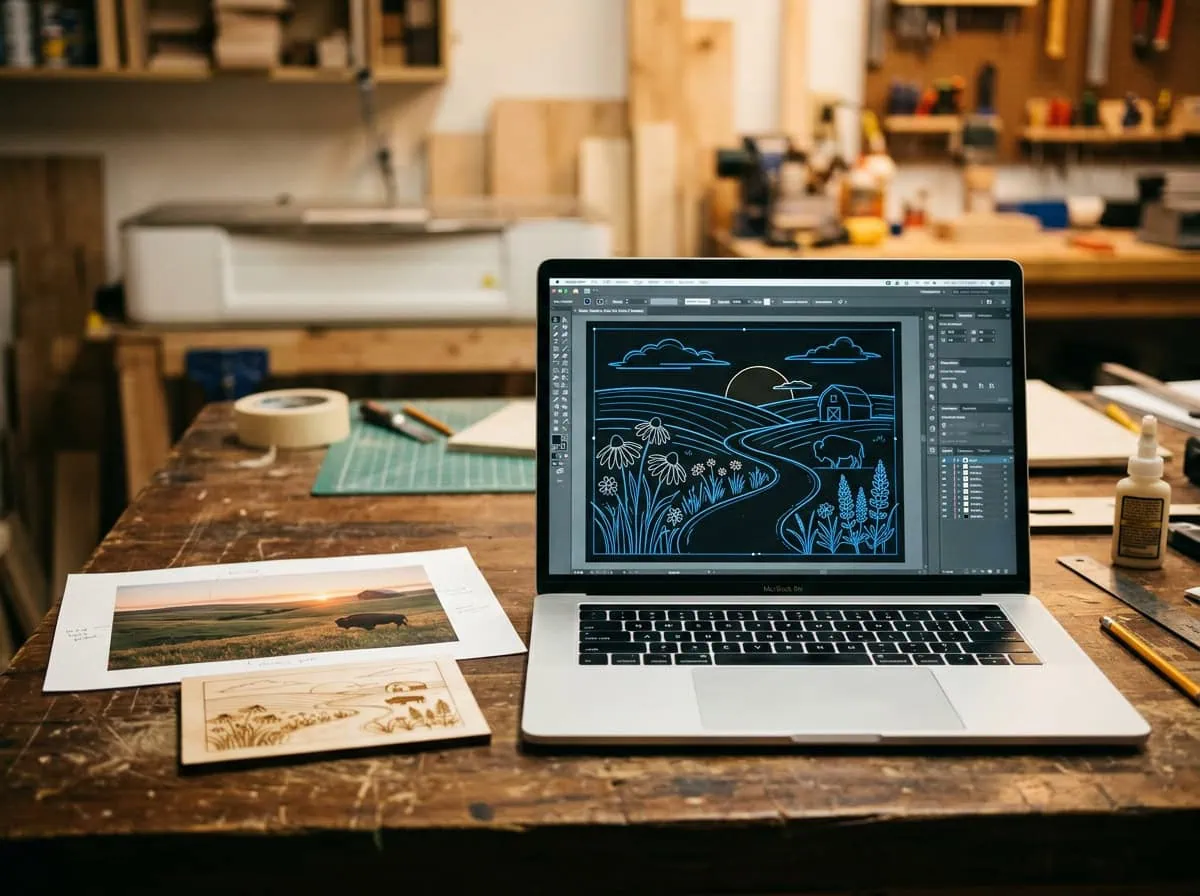
Every piece starts as a digital design. We create artwork in design software, set it up with the correct dimensions and material settings, and load it into the laser’s control software. Here’s where the testing comes in — every material, every thickness, and every type of engraving requires different speed and power settings.
Too much power on thin birch? You burn through the back. Not enough power on stainless steel? The engraving is too faint to read. Getting these settings right is part science, part experience, and part “let me try one more test piece.”
Too much power on thin birch? You burn through the back. Not enough power on stainless steel? The engraving is too faint to read. Getting these settings right is part science, part experience, and part “let me try one more test piece.”
Once settings are dialled in, the laser runs the design. A typical ornament takes 2-5 minutes depending on detail. A full cutting board with a complex design can take 20-45 minutes. During that time, I’m watching the machine, checking for consistency, and making sure nothing shifts mid-run. This isn’t a press-start-and-walk-away process — at least not in this workshop.
Why Laser Engraving Beats Other Methods
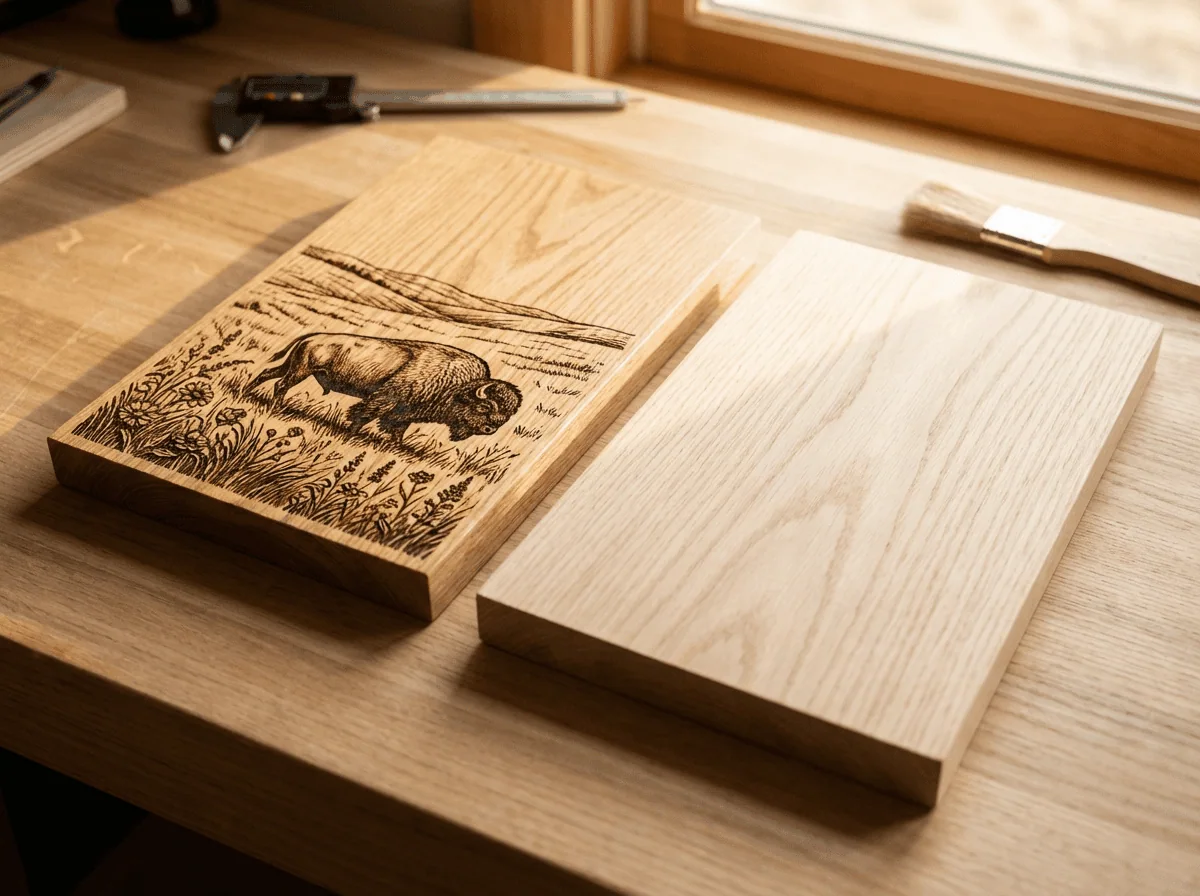
Compared to printing, stamping, or hand-carving, laser engraving is permanent. It doesn’t peel, fade, wash off, or wear away with normal use. The design is physically removed from or burned into the material — it’s part of the object now, not sitting on top of it.
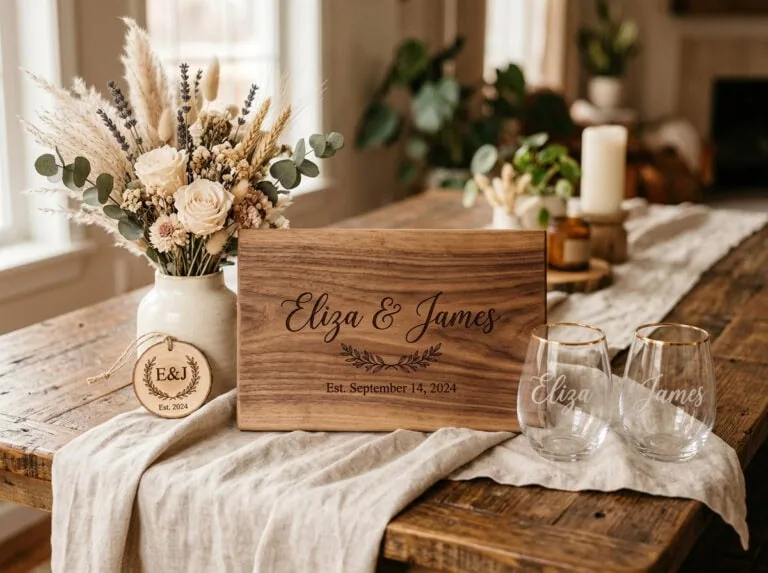
It’s also incredibly precise. We can engrave details finer than a pen could draw. Text, logos, photographs, intricate patterns — the laser handles it all with consistency that hand tools can’t match, while still keeping every piece handcrafted because a human is designing, setting up, supervising, and finishing every single one.
The Human Part of a Machine Process
People sometimes assume laser engraving is fully automated — like you press a button and a finished product pops out. It’s not. Not even close.
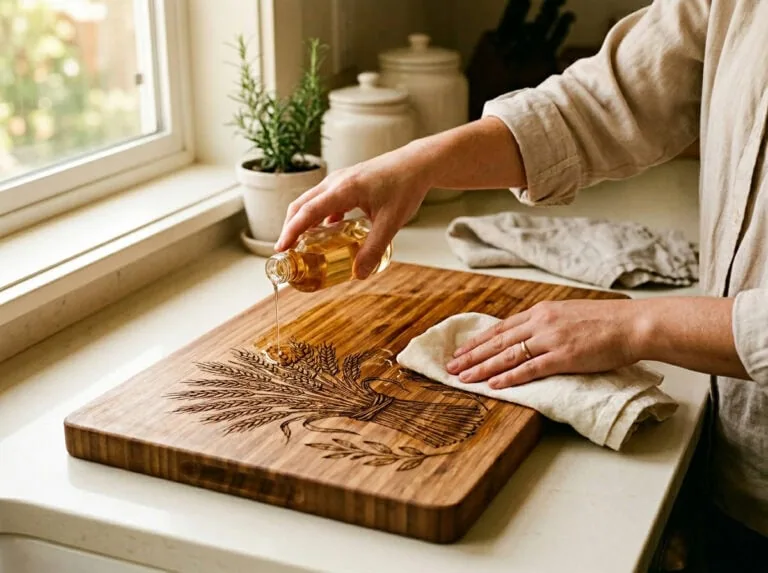
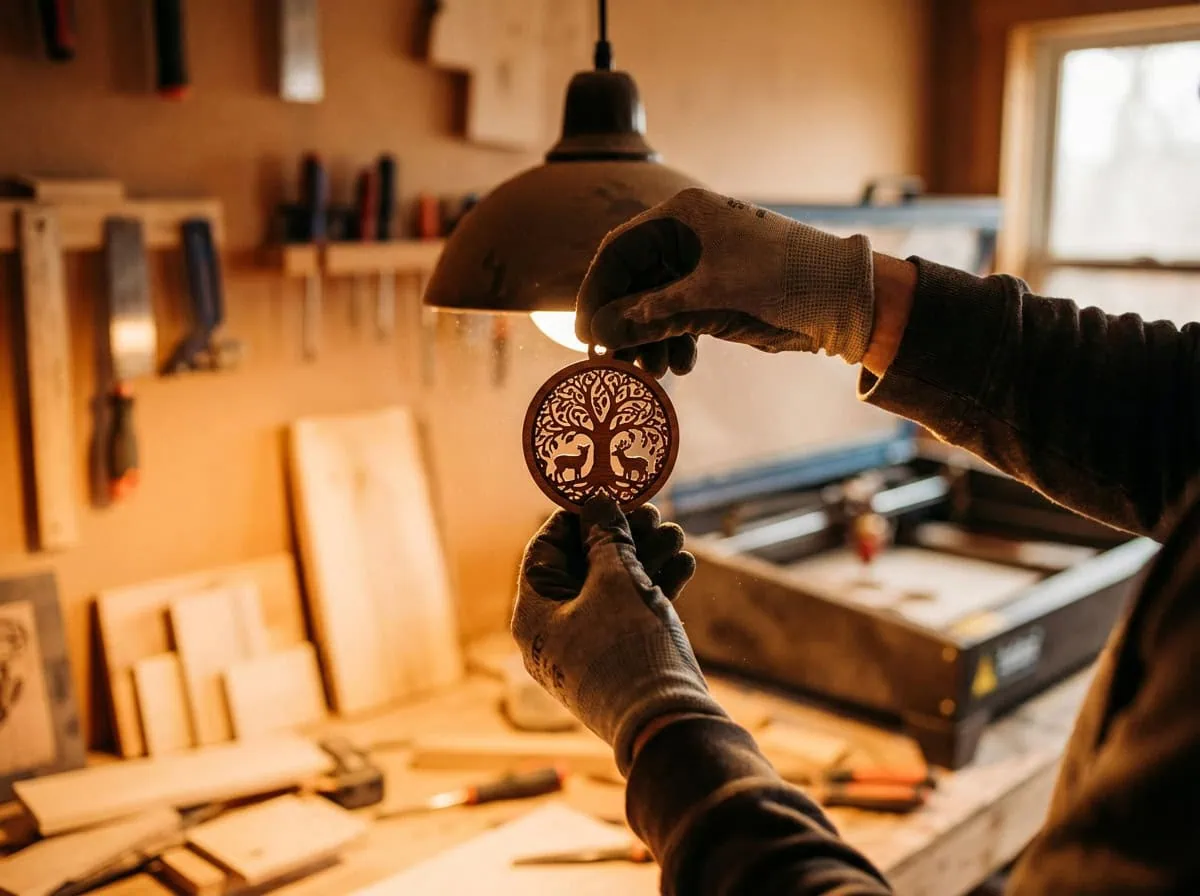
Every piece that comes off our laser gets hand-finished. Wood pieces get sanded, cleaned, and inspected. Cutting boards get oiled. Ornaments get checked for burn consistency and detail clarity. If something doesn’t meet the standard, it doesn’t ship. It goes in the scrap pile and we run it again.
The laser is a tool. A very precise, very powerful tool. But the craftsmanship comes from the person running it — choosing the right settings, selecting the right materials, designing artwork that works at the scale and depth the laser can achieve, and knowing when something is good enough to leave the workshop versus when it needs another pass.
That’s how laser engraving works at Grey Barn Handwerk. It’s technology and tradition working together in a barn in St. Gregor, Saskatchewan. No factory floor. No assembly line. Just one maker, one laser, and a whole lot of care.
Want to See How Laser Engraving Works in Person?
If you’re curious about how laser engraving works on a specific material or want to discuss a custom project, reach out. We love talking about the process — probably more than is socially acceptable. And if you’re local to the Humboldt or St. Gregor area, you can book a workshop visit by appointment to see the laser in person.
Browse our laser-engraved products at greybarn.ca or start a custom order.